

 CN

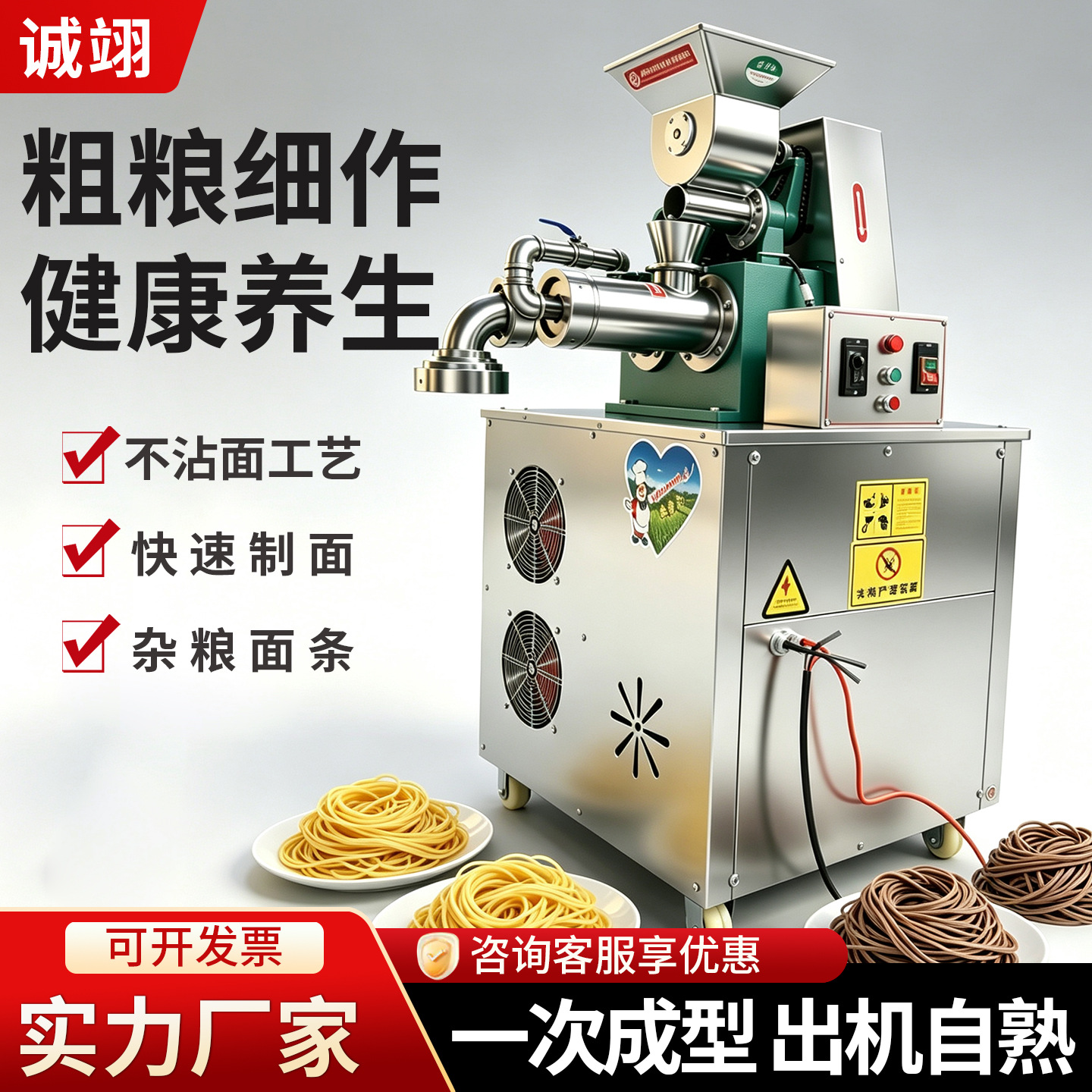
Chengyi Automatic Corn Noodle Machine: A Small-Investment Commercial Noodle Solution
Corn noodles, rice noodles, Korean cold noodles and sweet potato noodles are no longer niche products. They are fast-moving staples in noodle shops, canteens, food factories and delivery kitchens. What holds many new operators back is not demand — it is equipment cost and workflow complexity. The Chengyi automatic corn noodle machine is designed to remove both barriers: a compact commercial-grade unit made from stainless steel, positioned squarely at the small-investment, high-return end of the market.
This article looks at what the machine actually does, who it suits, and what buyers should know before placing an order — including what the 150 model deposit specification on the listing means in practice.
One Machine, Four Noodle Categories
The most practical feature of this unit is its material flexibility. Instead of committing to a single product line, operators can switch between raw materials and rebalance their menu as demand shifts. The machine handles:
- Corn noodles — the core application, and the source of the product's common alternative name, corn noodle machine.
- Self-cooking rice noodles (zishu mixian) — the extruder applies enough heat and pressure to gelatinize the starch during forming, so the noodles come out ready for a short cook.
- Korean cold noodles — chewy, elastic strands with the firm bite that cold noodle dishes require.
- Sweet potato noodles — a high-value line for hot pot, stir-fry and cold dishes.
What the 150 Model Specification Means
The listing is configured as the 150 model, deposit (定金) option. In plain terms, the 150 designation refers to the machine's size class within the Chengyi range — a mid-small commercial footprint that fits a working kitchen rather than a dedicated production hall. The deposit listing is a standard convention on Chinese sourcing platforms: buyers reserve a 150 model unit with a partial payment, then settle the balance once specifications such as voltage, die set and delivery schedule are confirmed.
If you are buying from outside China, treat the deposit listing as a conversation starter rather than a checkout button. Confirm the final configuration, the die sizes included, the voltage standard for your market, and the shipping terms before you commit to the full payment.
Built for Noodle Shops and Food Factories
Chengyi positions this machine for two buyer profiles, and the design reflects both:
Noodle shops and restaurants
A restaurant needs fresh noodles at predictable volume, at the moment the kitchen needs them. Extruding in-house eliminates the dependency on a supplier's delivery window, removes the cost of buying finished noodles, and allows a shop to offer corn or sweet potato noodles as a signature item rather than a menu afterthought. Leftover dough can be worked back into the next batch, which keeps waste low.
Small and mid-sized food factories
For producers packaging dry or semi-dry noodles, the machine's consistency matters more than its speed. Uniform strand diameter and even texture make downstream drying, weighing and sealing far more predictable. The stainless steel body also simplifies washdown between production runs, which matters for hygiene compliance.
Why Stainless Steel Is the Right Body Material
Noodle production is a wet, starchy, mildly abrasive process. Mild steel would rust and contaminate the product within weeks. The Chengyi machine's stainless steel body addresses this at three levels:
- Food safety — the contact surfaces resist corrosion and do not impart taste or discoloration to the dough.
- Cleanability — starch residue releases from a smooth stainless surface quickly, shortening the end-of-shift cleaning routine.
- Service life — a well-maintained stainless unit holds its value and keeps working through years of daily operation, which is the whole point of a small-investment purchase.
Performance Snapshot
| Attribute | Detail |
|---|---|
| Brand | Chengyi |
| Product type | Automatic small-to-medium commercial noodle machine |
| Alternative name | Corn noodle machine |
| Body material | Stainless steel |
| Specification | 150 model (deposit listing) |
| Noodle types | Corn noodles, self-cooking rice noodles, Korean cold noodles, sweet potato noodles |
| Suitable for | Noodle shops, restaurants, food factories, food processing businesses |
| Investment level | Small-investment / start-up friendly |
| After-sales service | One-year warranty |
| Primary sales channel | eBay |
| Main market | China |
| Cross-border export exclusive supply | No |
A Realistic Look at the Investment Case
Small-investment equipment appeals to first-time operators because it lowers the cost of testing a business idea. That logic holds here, but it is worth being concrete about how the economics work.
A noodle shop buying finished corn noodles pays a supplier margin on every kilogram it serves. Extruding in-house converts that margin into equipment depreciation, raw material cost and labour time. For a shop serving 30 to 80 noodle portions a day, the gap between those two numbers is what pays for the machine.
For a food factory, the calculation is different but no less favourable. The machine's value is in producing a consistent base product that can be dried, portioned and packaged without constant manual adjustment — reducing reject rates and rework.
And because the machine is not tied to a single raw material, the operator is not exposed to a single product category. If corn noodle demand softens, sweet potato noodles or cold noodles can take up the capacity.
What's Included in the After-Sales Package
Chengyi backs the machine with a one-year warranty. For commercial kitchen equipment, warranty coverage matters most for the drive system and the extrusion assembly — the parts that carry the daily load. Confirm with the seller what the warranty covers, how spare parts are supplied, and whether replacement dies are available for the noodle shapes you intend to produce.
Because the machine is sold primarily through eBay and the main market is China, international buyers should also verify:
- The voltage and plug standard for their country.
- The set of dies included with the 150 model, and the cost of additional dies.
- Whether the unit ships as a complete assembly or requires on-site setup.
- Lead time from deposit payment to dispatch.
Who Should Not Buy This Machine
Clarity cuts both ways. This is not a high-volume industrial extruder, and it is not intended for continuous 24-hour production lines. Businesses projecting tonnage-level output should look at larger, purpose-built equipment. Similarly, operators who want to produce only one noodle type at a fixed specification may find a dedicated single-purpose machine simpler.
The Chengyi 150 model is at its best when the requirement is variety, moderate volume and a controlled initial outlay — the profile of most noodle shops and emerging food factories.
Frequently Asked Questions
Is this machine only for corn noodles?
No. Corn noodles are the primary application, but the same unit produces self-cooking rice noodles, Korean cold noodles and sweet potato noodles by changing the raw material mix and die set.
What does 150 model deposit mean?
It means the listing is for a 150 model unit sold on a deposit basis. The deposit reserves the machine; the remaining balance is settled after configuration, voltage and delivery details are confirmed.
Can I use it in a home kitchen?
It is a commercial machine intended for noodle shops and food factories. Home users who make noodles occasionally would be over-equipping.
Is one year of warranty enough?
A one-year warranty is standard for this equipment class. What matters more is parts availability after the warranty period — confirm that dies, augers and drive components can be reordered.
Final Thoughts
The Chengyi automatic corn noodle machine is a focused product: stainless steel construction, automatic operation, four noodle categories from one unit, and a price point built for small-investment start-ups. It fits the operator who wants to make fresh noodles in-house without committing to industrial-scale equipment, and who values being able to change the menu without changing the machine.
If that describes your business, start by confirming the 150 model configuration, the die set and the voltage for your market with the seller on eBay — then reserve your unit with the deposit and plan the balance payment around your opening schedule.