

 CN

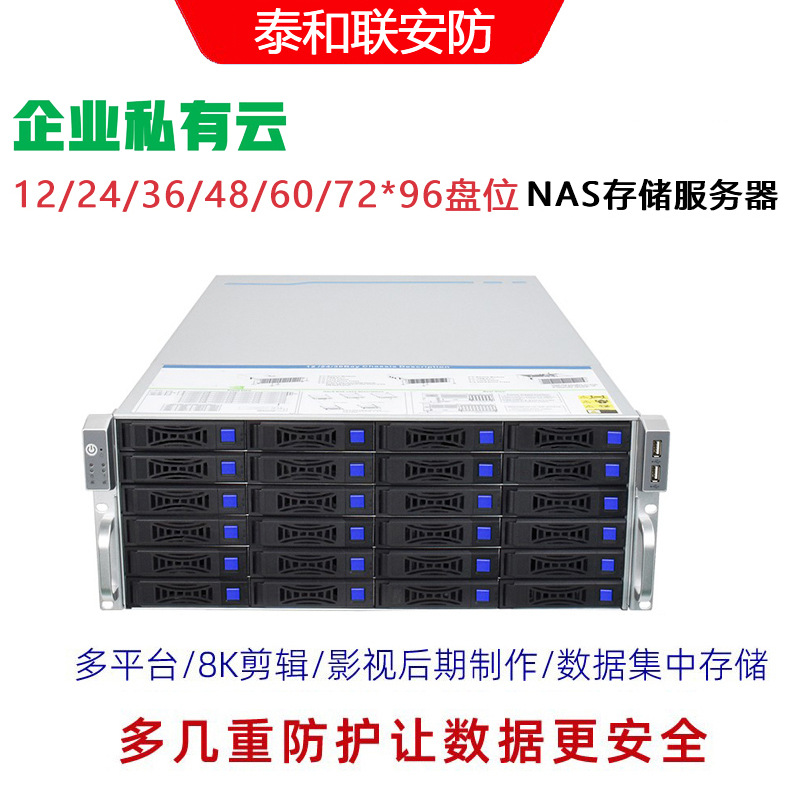
24-bay storage server, 6th and 9th generation direct backplane hot-swappable chassis industrial control storage server
When a surveillance system grows beyond a handful of cameras, the bottleneck is rarely the cameras themselves — it is the decoding and display layer. The Multi-Channel HDMI HD Video Surveillance Decoder Matrix DS-6A01UD / 6A04UD / 6A08UD is built for exactly this problem: it takes encoded network video streams and turns them into clean, synchronized, large-format visuals across multiple screens, with integrated splicing and control capability from a single chassis.
This guide walks through what this decoder matrix does, the hardware specifications buyers should understand before ordering, and the deployment scenarios where it delivers the most value.
What Is a Video Surveillance Decoder Matrix?
A decoder matrix converts compressed IP video streams — typically H.264 or H.265 from network cameras, NVRs, or streaming platforms — back into uncompressed HDMI and VGA signals for display on monitors and video walls. Unlike a standalone decoder that feeds one screen, a matrix-class device distributes multiple sources to multiple outputs, allowing operators to switch layouts, split screens, and send different camera groups to different displays in real time.
The DS-6A01UD / 6A04UD / 6A08UD series goes one step further by embedding a 2-screen HD decoder matrix with built-in splicing and splicing control inside a single unit. That means the device handles both the decoding load and the screen-composition logic, reducing the number of separate boxes — and the number of potential failure points — in a control room rack.
Key Specifications at a Glance
The following figures reflect the published product data for this model series. Buyers planning a project should match these numbers against their screen count, camera count, and audio requirements before confirming an order.
| Parameter | Specification |
|---|---|
| Series / Model | DS-6A01UD, DS-6A04UD, DS-6A06UD, DS-6A08UD |
| Product Type | 2-screen HD decoder matrix with integrated splicing and splicing control |
| HDMI Outputs | 16 channels |
| VGA Outputs | 48 channels |
| BNC Outputs | 8 channels |
| Audio Outputs | 16 channels |
| Input Interfaces | 8 |
| Alarm Inputs / Outputs | 8 / 8 |
| Network Interface | 1 |
| Mux / Multiplex Coding (合码) | Not supported |
| Wi-Fi | Not supported |
| Power Supply | External, 220V |
| Power Consumption | 45W |
| Operating Temperature | -20°C to 75°C |
| Operating Humidity | 35% |
| Dimensions | 450 mm |
| Weight | 22.3 kg |
| Origin | China |
Why the Integrated Splicing Control Matters
Traditional video wall builds require three separate layers: decoders, a splicing controller, and a management platform. Each layer adds cost, cabling, and a new device that can fail. This decoder matrix consolidates the first two. The 2-screen HD decoder matrix design means two independent display zones can be composed from the same chassis, each showing a different mosaic of cameras, while the splicing engine keeps bezel compensation and window placement consistent.
For a control room operator, the practical benefit is simple: fewer racks, shorter commissioning time, and one interface for both stream selection and screen layout. For an integrator, it means a shorter bill of materials and a cleaner as-built drawing.
Output Flexibility: HDMI, VGA, and BNC on One Chassis
Mixed-fleet environments rarely standardize on one display connector. This unit addresses that directly with 16 HDMI outputs, 48 VGA outputs, and 8 BNC outputs in the same chassis. HDMI carries the primary high-definition display signal to modern monitors and LED sending cards. VGA supports legacy displays, projectors, and analog matrix extensions still common in older buildings. BNC outputs give direct compatibility with analog monitors and CCTV test equipment — useful during commissioning and in hybrid analog-digital sites.
Audio is not treated as an afterthought either: 16 audio output channels allow the decoder to route sound alongside video, which matters for interview rooms, evidence review stations, and public-facing security desks where audio monitoring is part of the standard operating procedure.
Input, Alarm, and Network Capability
The unit provides 8 input interfaces and a single network interface for stream acquisition and platform communication. Alarm integration is handled through 8 alarm inputs and 8 alarm outputs, letting the decoder respond to door contacts, motion sensors, or external triggers by switching a display layout, activating a monitor, or raising an alert. In practice, this creates an event-driven display: when a perimeter sensor trips, the relevant camera group can be brought to the foreground automatically.
Two limitations should be noted up front. Multiplex coding (合码) is not supported, so stream assignment must be planned per output rather than relying on combined-channel encoding. Wi-Fi is also not supported, which is appropriate for a fixed rack-mounted security device — connectivity is wired and deterministic, reducing a class of security and reliability concerns common to wireless links.
Environmental and Installation Considerations
The -20°C to 75°C operating temperature range is notably wide for a decoding appliance. It supports installation in unconditioned equipment rooms, roadside cabinets, and warehouse control booths where HVAC cannot be guaranteed. Operating humidity is specified at 35%, so in high-humidity climates an enclosure or dehumidification strategy should be part of the plan.
At 22.3 kg with 450 mm dimensions, the chassis is a substantial rack component and should be mounted with proper support and airflow clearance. The external 220V power supply keeps heat and mains conversion outside the main enclosure, and the 45W power consumption is modest for a device with this output count — a real consideration when totalling load for a UPS-backed rack.
Typical Deployment Scenarios
1. Central Monitoring Rooms
Security operations centers that need to display dozens of camera feeds across multiple monitors benefit from the high output count. Operators can dedicate HDMI displays to primary incident zones while VGA feeds serve supervisor desks and overflow stations.
2. Multi-Department Video Walls
Because two independent HD display zones are supported with integrated splicing, a single unit can serve, for example, a lobby display and a control desk display with different content and layouts — without duplicating hardware.
3. Hybrid Analog-Digital Retrofits
Facilities upgrading from analog CCTV can retain existing BNC infrastructure for select monitoring points while pushing new IP camera feeds to HDMI and VGA displays, avoiding a full rip-and-replace of display cabling.
4. Industrial and Outdoor-Adjacent Sites
The wide temperature tolerance makes this decoder suitable for factories, logistics yards, and utility sites where the equipment room is not climate-controlled year-round.
Selection Guidance Across the Series
The DS-6A01UD, DS-6A04UD, DS-6A06UD, and DS-6A08UD share a common architectural platform, which simplifies procurement for multi-site rollouts: training, rack layout, and platform integration are identical across the series. When comparing models, confirm the following against your project drawings:
- Total number of physical displays and their connector types (HDMI, VGA, BNC)
- Maximum simultaneous camera windows required per display zone
- Whether audio monitoring is needed at each operator position
- Alarm trigger workflows and the number of sensor inputs involved
- Rack space, weight loading, and power budget per enclosure
- Network topology — single uplink planning and stream distribution design
Final Thoughts
The Multi-Channel HDMI HD Video Surveillance Decoder Matrix DS-6A01UD / 6A04UD / 6A08UD is a purpose-built control-room component rather than a general-purpose AV box. Its strengths are density, connector flexibility, integrated splicing control, and environmental tolerance. Its constraints — no multiplex coding and no wireless — are consistent with a device designed to sit in a rack and behave predictably for years.
For integrators and facility managers planning a video wall or upgrading an aging decode layer, this series is worth evaluating against the project's display count, alarm logic, and cabinet conditions. Match the specifications to the site, and the platform will deliver stable, synchronized visuals with a simpler supporting infrastructure than a multi-box alternative.