

 CN

Food-Grade Nylon Brush Rollers for Tofu Skin and Bean Curd Sheet Machines
In the production of thousand-layer tofu skin (qianzhang), bean curd sheets (doushan), and related soy-based foods, the brush roller is a small component with an outsized job. It guides the thin protein film as it forms, keeps the fabric belt clean, and removes residue before it hardens into a defect. When that roller fails, production does not slow down gracefully — it stops. This article takes a close look at a purpose-built food machinery brush roller designed for exactly these conditions: the ZHONGHUIYA RT-002, manufactured in Tongcheng, Anhui Province, China.
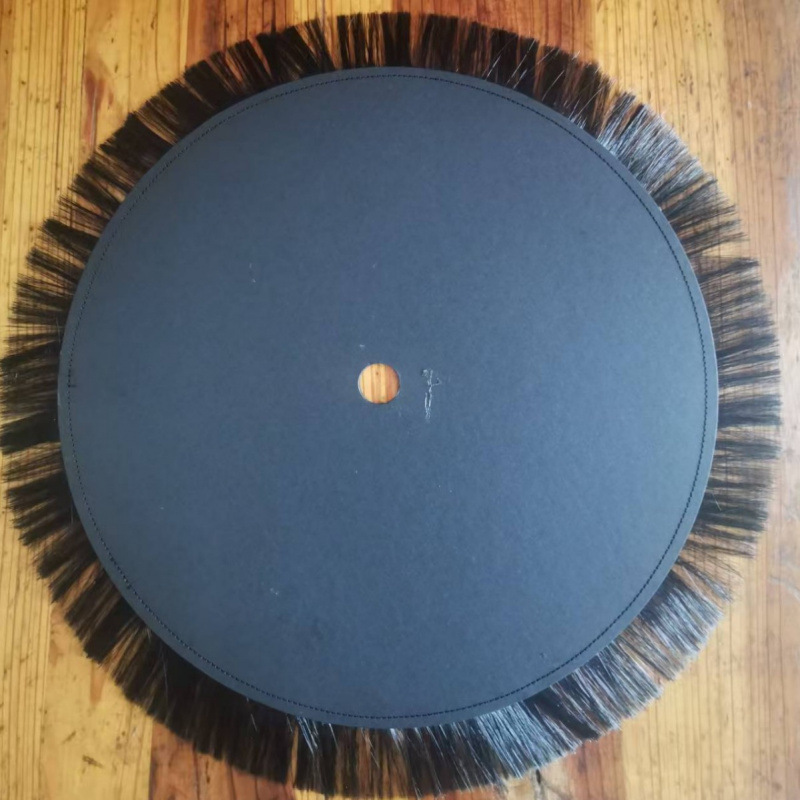
Product Overview
The RT-002 is a cylindrical brush roller from ZHONGHUIYA, an industrial brush manufacturer based in Tongcheng, Anhui — a region of China with a long-established concentration of brush-making expertise. The roller is engineered for continuous contact with food-processing equipment, and it is built around the practical reality that every production line has slightly different dimensions, shaft configurations, and hygiene requirements.
At a Glance
- Product type: Industrial brush roller (tool brush classification)
- Brand: ZHONGHUIYA
- Model: RT-002
- Brush filament material: Nylon
- Filament length: Customized to requirements
- Roller dimensions and materials: Customized to requirements
- Heat resistance: High-temperature tolerant construction
- Place of origin: Tongcheng, Anhui, China
- Imported: No — domestically manufactured
- Pricing: Quoted against specifications and materials
Why the Brush Roller Matters in Tofu Skin and Bean Curd Sheet Production
Thousand-layer tofu skin is made by pouring soy milk onto a heated belt or drum and allowing a thin film to form on the surface. That film is delicate — typically a fraction of a millimeter thick — and it is being formed continuously, at speed, over a long production run. The brush roller sits at the interface between the machinery and this fragile product.
Three jobs, one component
- Guiding: The roller helps keep the forming film or the carrier belt tracking correctly, preventing the sheet from drifting, wrinkling, or folding onto itself before it is peeled.
- Cleaning: Soy residue is sticky when wet and brittle when dry. A brush roller sweeps the belt or drum surface between passes, removing film fragments and coagulated protein before they burn on or create surface defects in the next cycle.
- Non-damaging contact: Unlike a scraper blade, a nylon brush applies light, distributed pressure. It removes residue without scoring the belt surface or tearing the product film.
A roller with the wrong filament diameter, the wrong density, or insufficient heat tolerance will either fail to clean effectively or begin to deform and lose its shape — and once the bristles splay or melt, the damage to product quality is immediate.
Key Features of the RT-002
Nylon Filament
Nylon is the workhorse filament for food-contact cleaning brushes. It offers a good balance of flexibility, abrasion resistance, and fatigue life: the bristles bend repeatedly against a moving belt without taking a permanent set, and they hold their tips rather than fraying quickly. For tofu skin and bean curd sheet lines, a moderately stiff nylon gives enough cleaning action to lift residue while staying gentle on the belt and on the product.
High-Temperature Resistance
Soy milk is processed hot. Forming belts, drums, and the surrounding environment can run at elevated temperatures, and the brush roller sits close to that heat source for the whole shift. The RT-002 is built with heat-tolerant materials selected for this environment, so the filament does not soften, curl, or deform under sustained warm operating conditions. This is one of the most common failure points of general-purpose brushes used in soy food machinery, and it is specifically addressed in this design.
Custom Filament Length and Roller Specifications
There is no industry-wide standard brush roller. Two producers running the same nominal machine type may have different shaft diameters, core lengths, belt widths, and clearance gaps. The RT-002 is therefore made to order:
- Filament length cut to the required trim height
- Roller length, diameter, and core configuration matched to the machine
- Filament diameter selected to suit the cleaning intensity needed
- Tuft density and hole pattern specified to the application
- Core material options to suit the mounting and washdown routine
Because the roller is configured per order, pricing is quoted against the specification and materials rather than as a single fixed figure. This is standard practice for made-to-fit industrial brush rollers, and it is the only realistic way to guarantee that the brush will actually seat correctly in the machine.
Food Machinery Focus
The RT-002 is classified as a tool brush but is designed and marketed specifically for food processing equipment. Its most common deployments are on thousand-layer tofu skin machines, bean curd sheet machines, and related soy product lines where a rotating brush is needed to clean, guide, or tension a belt.
Where the Brush Roller Fits on the Line
Depending on the machine design, a brush roller may be used in several positions:
- Belt cleaning station: positioned against the return run of the carrier belt to strip residue after the sheet has been lifted
- Drum cleaning: pressed lightly against a heated drum surface to sweep away film remnants between revolutions
- Guidance and tensioning: running in contact with the belt edge or surface to keep alignment stable
- Pre-cleaning before forming: removing dust or debris from the belt ahead of the soy milk pour
In all of these positions, the critical parameters are the same: correct filament stiffness, correct contact pressure, and a roller that stays dimensionally stable through a full production shift.
Specifying the Right Roller
To get a roller that performs, buyers should be ready to supply the following information when requesting a quote:
- Roller dimensions — overall length, outer diameter, and core/shaft diameter, ideally with a drawing or a photo of the existing part
- Filament length — either the required trim height, or the distance from the core to the surface the brush must reach
- Filament diameter — usually specified as a range, or described in terms of the cleaning action required
- Application details — what the roller touches (belt, drum, product), operating temperature, and whether washdown with water or cleaning agents occurs
- Mounting method — shaft ends, keyway, bearing arrangement, or coupling details
- Order quantity — single replacement parts and repeat production orders are both accommodated
Supplying clear dimensions and a description of the operating environment shortens the quoting process considerably and reduces the risk of a roller that is close but not quite right.
Care and Replacement
Brush rollers are wear parts, and they will eventually need replacement. A few simple practices extend service life and protect product quality:
- Rinse the roller after each shift to remove soy residue before it dries and hardens between the bristles
- Avoid high-pressure jets aimed directly at the filament roots, which can loosen tufts over time
- Inspect for splayed, bent, or melted bristle tips — these indicate either excessive contact pressure or a temperature problem
- Check that the roller still runs true; a slightly bent core will produce uneven cleaning and accelerated wear
- Replace as a set where multiple identical rollers are used, to keep cleaning performance matched across the line
Why Source from a Specialist Brush Manufacturer
Brush rollers look simple, and that is precisely why they are often underspecified. The difference between a roller that lasts a few weeks and one that runs reliably for months usually comes down to filament grade, tuft anchoring, core balance, and heat tolerance — details that are invisible in a photo. Working with a manufacturer that builds industrial brushes as its core business means these details can be discussed and specified rather than assumed.
ZHONGHUIYA is based in Tongcheng, Anhui, and produces the RT-002 as a made-to-order component for food machinery applications. Because the product is domestically manufactured rather than imported, buyers avoid import lead times and can communicate directly about specifications, tolerances, and repeat orders.
Summary
The RT-002 food machinery brush roller is a purpose-built component for tofu skin and bean curd sheet production lines: nylon filament for effective, non-damaging cleaning; heat-resistant construction for hot soy processing environments; and full customization of filament length, roller dimensions, and core configuration. For producers dealing with frequent brush failures, uneven cleaning, or rollers that simply do not fit, a correctly specified replacement is often the fastest route to more stable product quality.
To request a quote, send your roller dimensions, required filament length, operating temperature, and mounting details. Pricing is provided against your specification and materials of construction.