

 CN

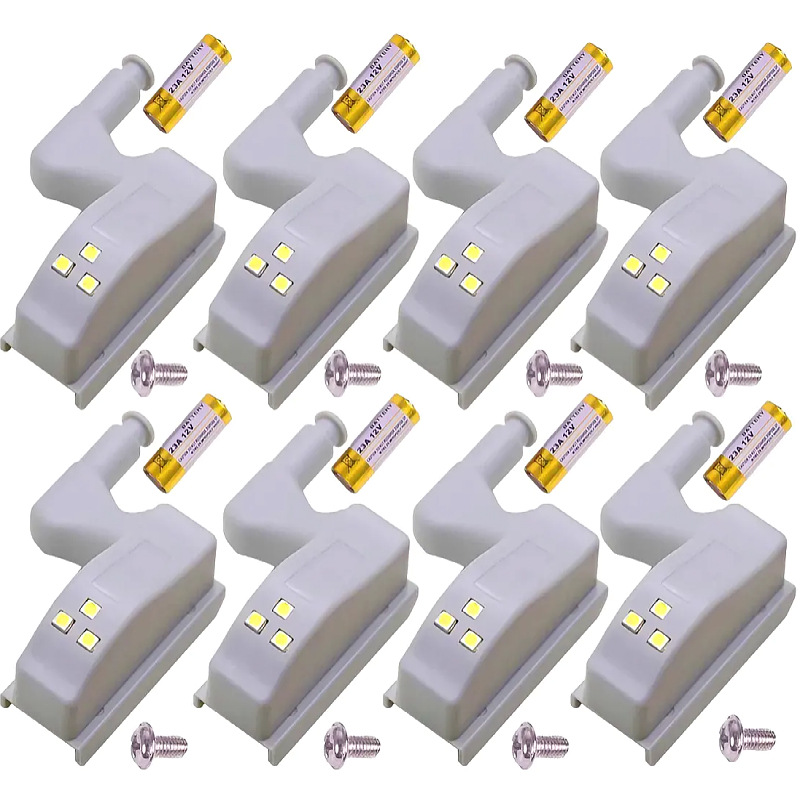
The manufacturer's best-selling LED hinge lights, sensor lights, wardrobe door and cabinet led lights, cross-border wholesale sensor hinge lights
Push-to-Open Cabinet Catches: The Simple Hardware Upgrade Behind Every Handle-Free Kitchen
Handle-free kitchens look effortless in photos, but they only work when the mechanism behind the door is reliable. A push-to-open catch — also called a rebound latch, press catch, or tip-on catch — is the small plastic component that lets a door or drawer open with a single press and close with a soft push. This article breaks down the white slimline press catch for cabinet doors and drawers, covering how it works, where it fits, and why it has become a steady seller for eBay-style e-commerce sellers and cross-border hardware traders.
What Is a Push-to-Open Catch?
A push-to-open catch is a mechanical latch that replaces a traditional door pull. Instead of gripping a handle, you press the door panel inward. The catch releases its spring-loaded mechanism, and a short internal push pops the door or drawer open a few centimeters, enough to pull it the rest of the way by hand. Closing works in reverse: a firm press sends the latch back into its locked position.
Because the mechanism does all the work, the visible front of the cabinet stays completely clean. That is the entire appeal of handle-free design — uninterrupted surfaces, easier cleaning, and fewer snag points in tight kitchens or walkways.
Product Snapshot
- Product type: Push-to-open / rebound catch for cabinet doors and drawers
- Configuration: Press-style, available for surface-mount (exposed) and concealed interior installation
- Material: Plastic
- Color and shape: White, slimline elongated body
- Origin: Guangdong, China
- Primary sales channel: eBay and similar marketplace platforms
- Main market focus: China and cross-border export markets
- Cross-border export designated supply: Yes
- Licensed private label available: No — suitable for neutral or unbranded resale
Why the Slimline White Housing Matters
Hardware this small is often chosen on dimensions as much as function. The slimline white body solves three practical problems at once:
1. It Disappears Inside the Cabinet
Most installations hide the catch behind the door, but the white housing also keeps it low-contrast if part of it is visible at the door edge. In white, cream, and pale wood interiors, it blends rather than draws the eye.
2. It Fits Tight Clearances
Slimline elongated housings are designed for cabinets where depth is limited — shallow wall units, drawer boxes, and doors with a narrow stile. A compact body reduces the risk of fouling on the shelf or drawer sides.
3. It Suits High-Volume Production
Plastic construction keeps unit weight and cost low, which matters for sellers shipping large quantities through cross-border logistics. The same material choice makes installation forgiving: plastic housings tolerate the slight alignment errors common in flat-pack and modular cabinetry better than rigid metal assemblies.
Surface-Mount vs. Concealed Installation
The same catch can be configured two ways, and understanding the difference helps you match the product to the right buyer.
Exposed (Surface-Mount) Setup
The catch is screwed directly to the cabinet carcass or the inside face of the door, with the striker opposite it. This is the easier retrofit option because it needs no routing and only a screwdriver. It is the best fit for upgrading existing cabinets or for DIY customers who do not want to modify the door.
Concealed (Recessed) Setup
The mechanism sits inside a drilled or routed pocket so it is hidden entirely when the door is closed. This gives the cleanest result on premium handle-free cabinetry, but it requires accurate drilling depth and spacing. It is the configuration most often specified for new kitchen builds and custom joinery.
Because the white slimline catch can be supplied for both mounting styles, sellers can present one product family across entry-level retrofits and higher-spec new installations.
Where It Works Best
- Kitchen wall and base units — the most common use, especially in handle-free designs
- Bathroom vanity cabinets — plastic housings handle humid interiors without rust concerns
- Bedroom wardrobes and closets — clean fronts reduce visual clutter in small rooms
- Drawer fronts — light-duty drawers with a firm press-to-close action
- Media units and storage benches — furniture where a handle would interrupt the panel line
- Office and shop fitting cabinetry — repeated press-and-close use with easy replacement
What E-Commerce Sellers Should Know
This catch has a profile that fits marketplace selling well, and the supply chain is set up for it: the product is produced in Guangdong, the primary downstream platform is eBay, and the goods are designated as cross-border export supply. A few points are worth stating clearly in any listing.
Sell the Problem, Not Just the Part
Buyers search for push to open catch, rebound door latch, tip-on catch, and press catch for cabinet doors. Listing copy should explain the outcome — a handle-free door that opens with a press — rather than only listing dimensions. Include both the door and drawer use cases in the description, since many buyers are working on a full kitchen refresh.
Set Expectations on Load
A press catch is a light-duty mechanism. It is designed for standard domestic doors and light drawers, not for heavy solid-timber or oversized panels. Stating a suitable door weight range and recommending two catches for wider doors reduces returns and negative reviews.
Clarify the Brand Position
This item does not come with an licensed private label option, so it is best presented as a neutral, unbranded component. Sellers should position it on function, fit, and value rather than on brand name — which is exactly how marketplace hardware buyers shop anyway.
Bundle for Order Value
These catches are almost never bought singly. A typical kitchen needs six to twelve units. Multipacks of 4, 8, 12, and 20 pieces, with screws included, are the format that converts best on eBay and similar platforms.
Installation Notes
- Mark the position. Hold the door closed and mark where the catch body and striker should sit, keeping the two parts directly opposite each other.
- Check the gap. Confirm there is enough clearance between door and carcass for the mechanism to engage. Adjust door hinges if the gap is uneven.
- Fix the catch. Screw the body to the carcass for concealed setups, or to the door face for surface mounting, following the chosen configuration.
- Align the striker. Mount the striker plate opposite the catch and test the press action before final tightening.
- Test and fine-tune. The door should pop open on a light press and latch securely when pushed shut. If it does not, small position adjustments of the striker usually solve it.
Frequently Asked Questions
Does one catch work for every door?
No. Standard doors up to a typical domestic size work with one catch. Wider, heavier, or solid-wood doors benefit from two catches positioned evenly, or from a catch rated for higher load.
Can these be used on drawers?
Yes, on light-duty drawers. For deep or heavily loaded drawers, a heavier mechanism is the better choice.
Do they need to be hidden to look good?
Not necessarily. The white slimline housing is low-contrast against most light cabinet interiors, so surface-mounted installation still looks tidy.
Are they suitable for damp areas?
The plastic housings resist moisture well, which makes them a practical choice for bathroom and utility cabinetry. As with any mechanical part, smooth operation depends on correct alignment.
The Bottom Line
The push-to-open catch is one of the cheapest upgrades in cabinetry that changes how a kitchen or wardrobe actually feels to use. This white slimline plastic model — produced in Guangdong and supplied for cross-border export — is positioned for exactly that market: high-volume, unbranded, marketplace-friendly hardware that sellers can list confidently on eBay and similar platforms. For buyers building handle-free interiors or upgrading existing doors, it is a small component with an outsized effect on the finished result.
Supply note: cross-border export designated supply is available. This item does not carry an licensed private label program.