

 CN

Factory wholesale R20S mercury-free No. 1 iron shell batteries, high-energy carbon batteries, gas stove dry batteries, No. 1 batteries
Powering Your Smart Door Lock: Why the Right AA Battery Matters More Than You Think
Smart door locks and fingerprint locks have quietly become one of the most important pieces of hardware in a modern home. They replace keys, log entries, and give you remote control over who comes and goes. But every one of those features depends on a component that most people overlook until it fails: the batteries inside the lock.
A smart lock that dies at the wrong moment is more than an inconvenience — it can lock you out, force an emergency power jump, or leave your household without access. Choosing the right AA battery is therefore not a small decision. It is a reliability decision.
Why Smart Locks Are Hard on Batteries
Unlike a TV remote that sips power when you press a button, a smart door lock is constantly working. It runs a fingerprint sensor, a keypad or touch panel, a wireless module for app connectivity, and a motor that drives the deadbolt. The load is bursty: long periods of near-idle standby, punctuated by high-current spikes every time the lock motor engages.
That pattern places specific demands on a battery:
- Stable voltage under load. A motor-driven deadbolt needs a short, sharp burst of current. If voltage sags too much, the lock may fail to fully retract or extend, triggering an error or a jam.
- Low self-discharge. A lock may sit in standby for months. The battery needs to hold its charge during that idle period rather than draining away on the shelf.
- Leak resistance. Batteries live inside a sealed compartment for long stretches. Leakage can corrode the contacts and permanently damage the lock's circuit board.
- Consistent performance across temperature swings. Door-mounted electronics experience the full range of seasonal temperatures, from a cold hallway in winter to a sun-facing entryway in summer.
The Case for Alkaline AA Cells
Alkaline chemistry remains the practical default for smart locks for a simple reason: it delivers a higher energy density than standard carbon-zinc cells while keeping the cost per battery reasonable. For a device that might consume a set of four AA cells over six to twelve months, alkaline gives you a better balance of runtime, shelf life, and price than almost any alternative.
Rechargeable NiMH cells work in some locks but often sit at a lower nominal voltage, which can cause early low-battery warnings and inconsistent motor performance. Lithium AA cells perform well in extreme cold but cost significantly more. For the vast majority of household fingerprint locks, a well-made 1.5V alkaline AA battery is the right answer.
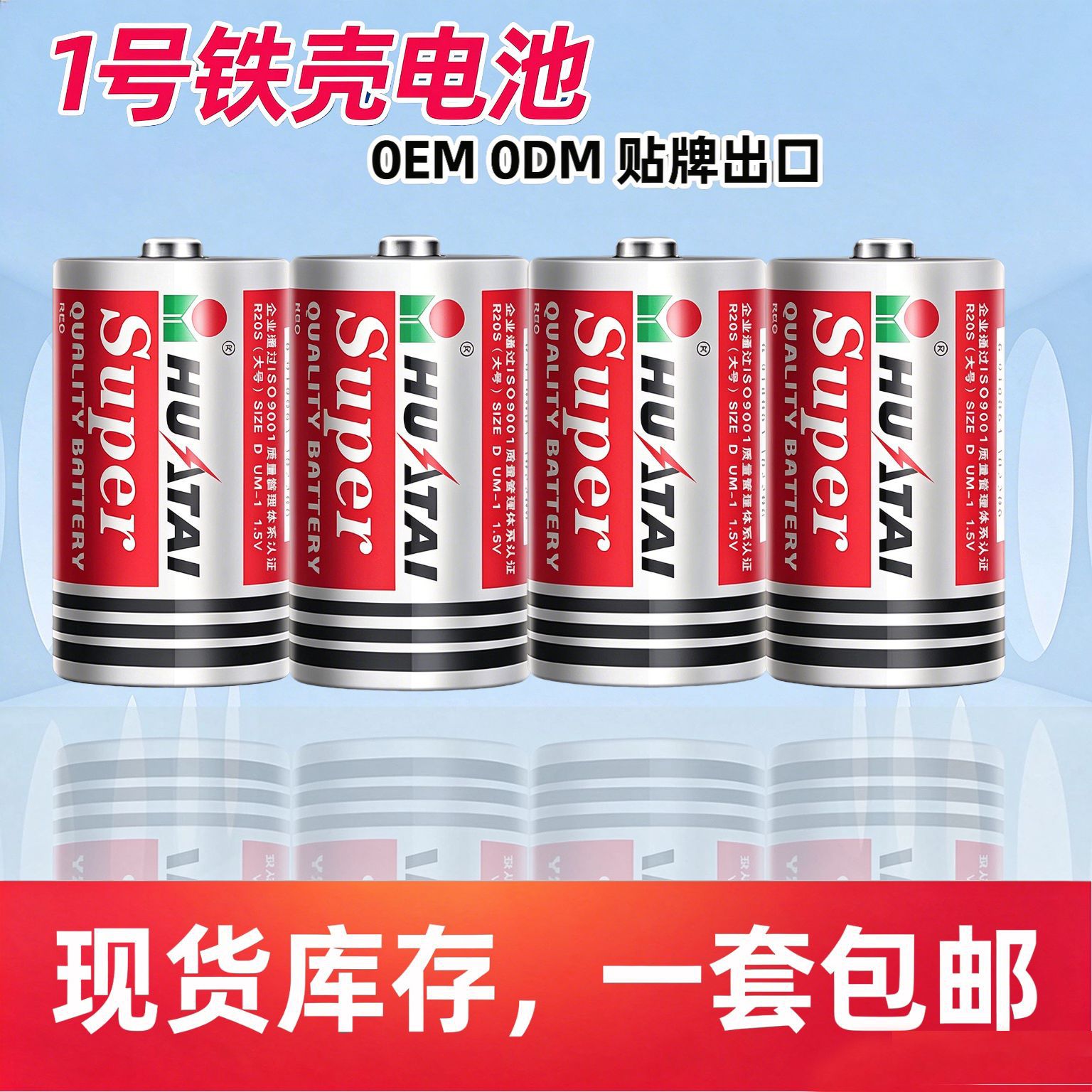
Introducing the Hua Tai 1.5V Alkaline AA Battery for Fingerprint Locks
The Hua Tai AA alkaline battery is built specifically around the needs of smart lock hardware. Each cell delivers a nominal 1.5V output in the standard AA form factor, which means it drops straight into the battery compartment of most mainstream fingerprint locks, keypad locks, and electronic deadbolts without adapters or modification.
Key details at a glance:
| Specification | Detail |
|---|---|
| Brand | Hua Tai |
| Model | Fingerprint Lock AA Alkaline (5号 / AA size) |
| Nominal Voltage | 1.5V |
| Battery Type | Alkaline dry cell |
| Certification | ROHS compliant |
| Origin | Non-imported (domestic production) |
| Pricing Unit | Single-cell price |
What the ROHS Certification Means for Your Home
ROHS compliance is not just a label on a box. It is a regulatory standard that restricts the use of specific hazardous substances — including lead, mercury, cadmium, and certain flame retardants — in electrical and electronic products. For a battery that will sit inside a device mounted on your front door for months at a time, that matters.
A ROHS-compliant cell means the battery has been assessed against restricted substance limits, which reduces the environmental footprint at end of life and lowers the risk of problematic materials being present in a component that lives in your home. For families with young children and for property managers responsible for dozens of units, that is a meaningful baseline.
Where These Batteries Fit
The standard AA form factor is the most widely used battery size in residential lock hardware, which gives the Hua Tai cell broad compatibility. Typical applications include:
- Fingerprint and biometric smart locks
- Keypad and password-based electronic locks
- Electronic deadbolts and mortise lock modules
- Wireless doorbell cameras and entry sensors that take AA cells
- Other household devices that require a dependable 1.5V AA alkaline supply — remotes, wall clocks, toys, and handheld meters
Because the product is priced per single cell, it also gives buyers flexibility. Households replacing a four-cell lock can order exactly what they need, while installers and property managers can scale up in bulk without being locked into a fixed pack size.
Practical Advice for Longer Battery Life in Your Smart Lock
Even with a quality alkaline cell, how you use the lock affects how long a set of batteries lasts. A few habits make a measurable difference:
- Replace all cells at once. Mixing fresh batteries with partially drained ones causes uneven discharge and can trigger false low-battery alerts.
- Never mix brands or chemistries. Alkaline and carbon-zinc cells have different discharge curves and should not share a compartment.
- Watch the low-battery warning. Most smart locks begin alerting well before failure. Treat that alert as a deadline, not a suggestion.
- Keep spare cells on hand. A single spare AA cell costs very little and eliminates the panicked late-night run to a convenience store.
- Clean the contacts. When you swap batteries, check the compartment for residue or corrosion and wipe the terminals before inserting new cells.
- Store spares properly. Keep unused cells in their original packaging in a dry place, away from metal objects that could short the terminals.
Why the Battery Is the Weak Link You Can Fix
People spend considerable time researching lock brands, fingerprint recognition speed, and app features. Far less attention goes to the cell that makes all of it run. Yet in practice, a large share of smart lock complaints — failed unlocking, random reboots, connectivity dropouts, premature low-battery warnings — trace back to the battery rather than the lock electronics.
Upgrading your battery is the cheapest reliability improvement available to any smart lock owner. It requires no installation, no configuration, and no technical skill — just a cell that delivers stable 1.5V alkaline output, holds its charge in standby, and carries a proper compliance certification.
Who Should Consider the Hua Tai AA Alkaline Battery
This cell is a practical fit for several groups:
- Homeowners running a fingerprint or password lock on the front door who want dependable daily performance.
- Renters and tenants who need a correct-fit replacement cell without hunting down a specific brand of lock battery.
- Property managers and landlords maintaining electronic access across multiple units, where consistent consumables reduce maintenance calls.
- Installers and locksmiths who want a cost-effective, ROHS-compliant AA cell to hand over with every lock installation.
- Small retailers stocking everyday replacement batteries alongside smart lock hardware.
Final Thoughts
A smart door lock is only as reliable as the energy source inside it. The Hua Tai 1.5V alkaline AA battery combines a standard AA form factor with alkaline energy density, 1.5V stable output, and ROHS compliance — a straightforward, no-compromise choice for fingerprint locks, password locks, and electronic deadbolts.
If you are setting up a smart lock for the first time, refreshing the cells before the low-battery alert arrives, or simply keeping a dependable supply of AA batteries in the house, this is a cell worth putting in the drawer. Reliable entry starts with reliable power.