

 CN

LINCOLN American Lincoln Kryo 1/E7018-G-H4R electrode, E7018-G-H4R low alloy steel electrode
Lincoln Kryo 1 / E7018-G-H4R Low-Alloy Steel Electrode: A Dependable Answer to Tough Welds and Cross-Border Supply
When a fabrication project demands sound welds, low hydrogen content and predictable performance in the field, the choice of electrode often decides whether a joint passes inspection or costs a rework. The Lincoln Kryo 1 / E7018-G-H4R low-alloy steel electrode — manufactured in the United States and supplied under Lincoln Electric part number 856381 — is engineered for exactly that kind of pressure. It combines a low-hydrogen iron-powder basic coating with the toughness profile of a Kryo-series low-alloy consumable, making it a practical choice for structural steel, pressure piping, heavy equipment repair and export projects across Africa, Southeast Asia and the Middle East.
This article walks through what the E7018-G-H4R classification actually means, the available diameters, the certification status, the welding positions covered, and the documentation a buyer should expect when sourcing the product as a cross-border export item.
Product Overview
The Kryo 1 is a low-alloy steel, low-hydrogen electrode designed for direct current electrode positive (DCEP) or alternating current operation. It is classified under the AWS A5.5 standard as E7018-G, with the H4R suffix indicating a diffusible hydrogen limit of no more than 4 ml per 100 g of deposited weld metal and a moisture-resistant coating. In plain terms: a basic-coated, iron-powder electrode that produces clean, ductile weld metal with reduced risk of hydrogen-assisted cracking in restrained joints.
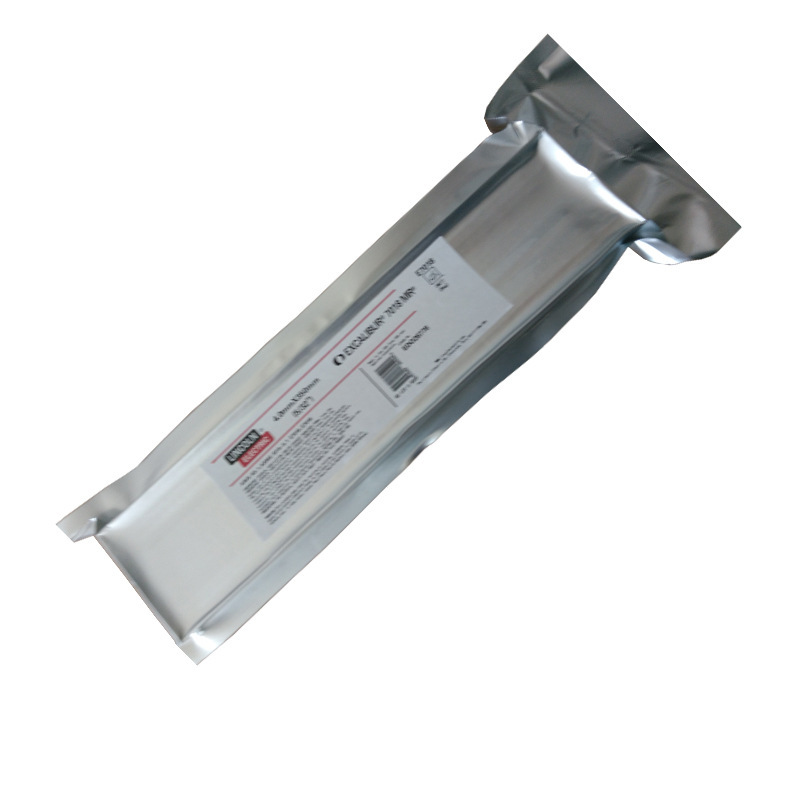
Key Specifications at a Glance
| Attribute | Detail |
|---|---|
| Brand | LINCOLN / Lincoln Electric |
| Product name | Lincoln Kryo 1 |
| Classification | E7018-G-H4R (AWS A5.5) |
| Part number | 856381 |
| Type | Low-alloy steel, low-hydrogen, basic coated stick electrode |
| Country of origin | United States (imported) |
| Available diameters | 2.5 mm / 3.2 mm / 4.0 mm / 5.0 mm |
| Welding positions | All-position (flat, horizontal, vertical, overhead) |
| Current type | AC or DCEP (DC electrode positive) |
| Industry certification | AWS |
| Environmental certification | RoHS compliant |
| Cross-border export supply | Yes — dedicated export source available |
Decoding E7018-G-H4R
- E — Electrode for shielded metal arc welding (SMAW).
- 70 — Minimum tensile strength of 70,000 psi (approximately 480 MPa) in the as-welded condition.
- 1 — All-position usability.
- 8 — Basic (low-hydrogen) coating with iron powder, typically operating on AC or DCEP, with a recovery rate high enough to make the electrode efficient on thicker sections.
- G — A general, manufacturer-specified classification covering low-alloy chemistry beyond the standard suffixes.
- H4 — Diffusible hydrogen content of 4 ml/100 g of weld metal or less, measured to the relevant AWS test method.
- R — Moisture-resistant coating, giving the electrode a longer working life once the package is opened or the electrode is exposed to humid conditions.
The combination of H4 hydrogen control and an R-rated coating matters most in humid climates. In coastal or tropical job sites — a common condition across many African markets — electrodes that absorb moisture quickly lose their low-hydrogen advantage. The moisture-resistant coating helps preserve performance between shifts and reduces the need for repeated re-baking.
Why Low-Alloy and Low-Hydrogen Matter
Hydrogen-assisted cold cracking is one of the most common causes of failure in high-restraint welds, thick sections and steels with elevated carbon equivalent. A basic-coated electrode with H4-grade hydrogen control reduces the amount of diffusible hydrogen entering the weld pool, which directly lowers the risk of delayed cracking after the joint cools. For structural fabrication, bridge components, pressure vessels and heavy machinery repair, this is the difference between a weld that passes ultrasonic inspection and one that does not.
The low-alloy designation also means the electrode is formulated to deliver a weld metal chemistry that supports higher strength and better toughness than a standard carbon-steel E7018. That makes the Kryo 1 suitable for welding low-alloy structural steels, fine-grained steels and equipment components where the base metal has a higher yield strength than plain carbon steel.
Typical Mechanical Performance
As with any manufactured consumable, final values are confirmed by the manufacturer's data sheet for the specific batch and diameter. Published performance for this class of electrode generally falls in the following ranges:
- Tensile strength: approximately 480–560 MPa (70–81 ksi)
- Yield strength: approximately 400–460 MPa
- Elongation: approximately 22–28% in 50 mm gauge length
- Impact toughness: tested at low temperature to confirm the Kryo series toughness profile
Because the classification is a G type, buyers should always request the current certification and test report for the lot being shipped, particularly for projects requiring impact testing or third-party inspection sign-off.
Recommended Operating Parameters
The following ranges are typical reference values for E7018-type electrodes and should be adjusted to the joint configuration, base metal thickness, position and the manufacturer's published recommendations:
| Diameter | Typical Current Range (DCEP) | Common Applications |
|---|---|---|
| 2.5 mm | 70–110 A | Root passes, thin plate, small fillets, repair work |
| 3.2 mm | 100–150 A | General fabrication, vertical and overhead passes |
| 4.0 mm | 140–190 A | Structural joints, medium-thickness plate, fill passes |
| 5.0 mm | 180–240 A | Heavy sections, flat and horizontal position, high deposition |
For best results, electrodes should be stored dry and, where the specification requires it, re-dried according to the manufacturer's baking schedule before use. Keep the electrode stub short to avoid coating overheating, and maintain a short arc to protect the weld pool from atmospheric contamination.
Where It Is Used
- Structural steel fabrication — beams, columns, bracing and connections in buildings and industrial sheds.
- Pressure and process piping — low-alloy and fine-grained pipe welding where hydrogen control is specified.
- Heavy equipment and plant maintenance — repair of excavators, crushers, conveyors, mining and quarrying machinery.
- Shipbuilding and offshore support structures — restrained joints requiring toughness and all-position capability.
- Bridge and infrastructure works — field welding where moisture resistance and consistent arc behaviour are essential.
- Power and refinery fabrication — low-alloy steel components subject to strict inspection standards.
Export Supply and Sourcing Considerations
For distributors, contractors and trading companies purchasing this electrode as an export item, several practical points make the sourcing process smoother.
Documentation
Buyers should confirm that the shipment includes the manufacturer's quality certificate, the AWS classification reference, the RoHS declaration and the material test report for the lot. For customs clearance in destination markets, a commercial invoice, packing list, certificate of origin and bill of lading are standard requirements. Where the destination country requires pre-shipment inspection, that should be clarified before the order is confirmed.
Packaging and Logistics
Electrodes are moisture-sensitive. Vacuum-sealed or moisture-barrier inner packaging, sturdy cartons and palletised loading all protect the coating during long sea freight. For African routes and other long-transit destinations, buyers should specify sealed packaging and confirm the storage recommendations printed on the carton.
Channel and Platform Availability
This product is offered as a cross-border export source and is promoted across major B2B and B2C platforms, including Baidu, Taobao, Pinduoduo, 1688/Aicaigou, Amazon, AliExpress, Wish, Lazada, Temu and Shopee, as well as independent online stores. That multi-channel presence makes it easier for importers to place trial orders in small quantities before committing to bulk purchasing.
Market Focus
African markets are a primary sales region for this item, driven by ongoing infrastructure, mining, agricultural equipment and construction activity. The combination of a US-made electrode, AWS classification and RoHS compliance aligns well with tenders and projects that specify internationally recognised welding consumables.
Buying Checklist
- Confirm the exact diameter mix required — 2.5, 3.2, 4.0 or 5.0 mm — since deposition rate, position capability and cost per metre of weld differ significantly by size.
- Request the certificate of quality and the lot-specific test report.
- Verify the H4 hydrogen designation and the moisture-resistant coating on the packaging.
- Check the RoHS documentation if the end user has environmental compliance requirements.
- Confirm packaging type and transit duration to avoid moisture damage in humid climates.
- Ask about mixed-diameter cartons or pallet configurations if you are supplying several customer segments at once.
Frequently Asked Questions
Is the Lincoln Kryo 1 a low-hydrogen electrode?
Yes. The H4R suffix in the E7018-G-H4R classification indicates a diffusible hydrogen content of 4 ml/100 g or less, together with a moisture-resistant coating.
Can it be used in all positions?
Yes. The electrode is rated for all-position welding, covering flat, horizontal, vertical and overhead work.
Which current should I use?
Both AC and DCEP are suitable. DCEP is generally preferred for arc stability and penetration control, particularly in the vertical and overhead positions.
Is this product imported and export-ready?
Yes. The item is manufactured in the United States and supplied as an imported, cross-border export product, with AWS certification and RoHS compliance in place.
What diameters are available?
Standard diameters are 2.5 mm, 3.2 mm, 4.0 mm and 5.0 mm, covering everything from root passes on thin sections to high-deposition work on heavy plate.
Final Thoughts
The Lincoln Kryo 1 / E7018-G-H4R low-alloy steel electrode, part number 856381, sits at the intersection of three things buyers care about most: verified weld quality, dependable low-hydrogen performance, and clean export supply. With AWS classification, RoHS compliance, all-position usability and four available diameters, it covers a broad range of structural, piping and maintenance applications. For importers serving African and other growth markets, it represents a consumable that is easy to stock, easy to justify to end users and supported by the reputation of a globally recognised welding brand.
Whether you are equipping a fabrication shop, restocking a distribution warehouse or supporting a project tender, confirming diameters, certification documents and packaging requirements up front will keep the delivery on schedule and the welds on specification.