

 CN

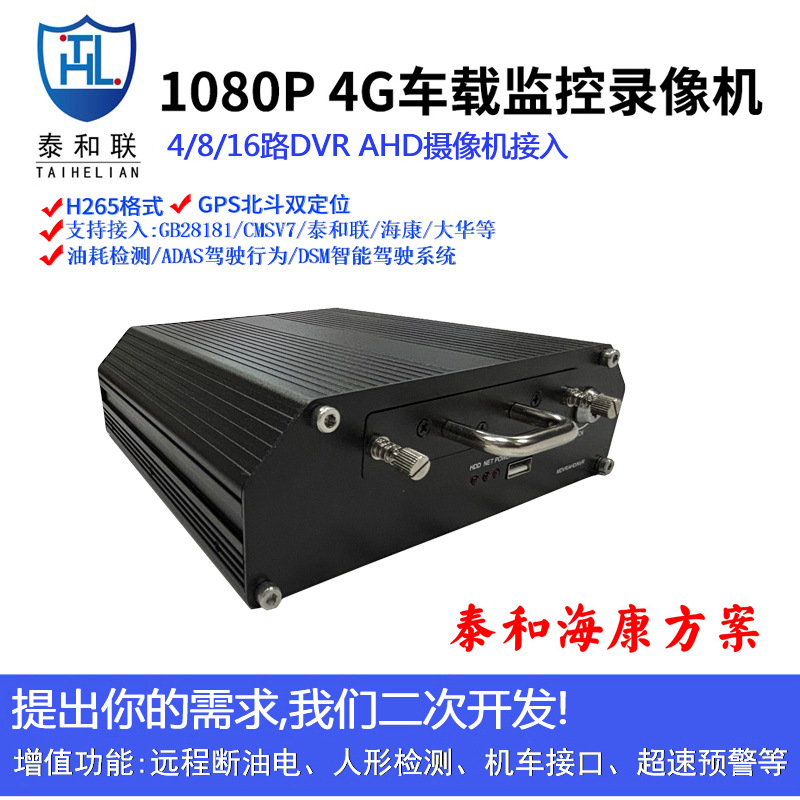
Brand-new 4G vehicle-mounted hard disk video recorder, 4-channel and 8-channel AHD monitoring host, GPS and Beidou positioning, GB28181 protocol
New Multi-Channel HDMI HD Video Surveillance Decoder Matrix DS-6A01UD / 6A04UD / 6A08UD
When a control room moves from a handful of monitors to a full video wall, the bottleneck is rarely the cameras — it is the decoding layer. The new multi-channel HDMI HD video surveillance decoder matrix DS-6A01UD / 6A04UD / 6A08UD is built for exactly that moment. It combines high-density decoding, HDMI and VGA output scaling, and a built-in splicing controller in a single 450 mm chassis, so integrators can drive large display arrays without stacking several separate boxes and the cabling that comes with them.
Designed and manufactured in China, this decoder matrix is positioned as a practical, deployment-ready solution for surveillance rooms, traffic monitoring centres, campus security hubs and industrial control facilities. The model family covers DS-6A01UD, DS-6A04UD, DS-6A06UD and DS-6A08UD, all sharing the same core architecture and a specification sheet written for continuous 24/7 operation.
What the DS-6A01UD / 6A04UD / 6A08UD Actually Does
At its core, the device is a 2-screen HD video decoding matrix with integrated splicing control. Network video streams enter through the single network interface, are decoded, and are then distributed across a very generous set of physical outputs: 16 HDMI ports, 48 VGA ports and 8 BNC ports. That output mix matters, because real installations are rarely uniform — a control desk might need HDMI for a video wall, VGA for legacy monitors already bolted into the room, and BNC for a coax run to an adjacent lobby display.
Because the splicing controller is built in, the decoder matrix can treat a group of physical screens as one logical canvas. Operators can push a single high-resolution camera feed across a two-screen wall, or split that wall into multiple windows showing different camera groups. There is no need for an external splicing processor, no additional rack unit, and no second configuration tool to learn.
Full Specification Overview
| Parameter | Specification |
|---|---|
| Product type | Multi-channel HD video surveillance decoder matrix |
| Model numbers | DS-6A01UD / DS-6A04UD / DS-6A06UD / DS-6A08UD |
| Configuration | 2-screen HD decoder matrix with built-in splicing control |
| HDMI outputs | 16 |
| VGA outputs | 48 |
| BNC outputs | 8 |
| Audio outputs | 16 |
| Input interfaces | 8 |
| Network interfaces | 1 |
| Alarm inputs | 8 |
| Alarm outputs | 8 |
| Stream multiplexing (combined streams) | Not supported |
| Wi-Fi | Not supported |
| Power supply | External, 220 V |
| Power consumption | 45 W |
| Operating temperature | -20 °C to 75 °C |
| Operating humidity | 35 % |
| Dimensions | 450 mm |
| Weight | 22.3 kg |
| Place of origin | China |
Output Density: 16 HDMI, 48 VGA and 8 BNC
The most striking number on the datasheet is the VGA output count. Forty-eight VGA outputs is unusual in a chassis of this class, and it tells you who the product is really built for: facilities that inherited a large analogue or VGA-era display estate and now need to feed it from an IP surveillance platform without ripping out every monitor.
Alongside those legacy ports sit 16 HDMI outputs, which is the modern side of the equation — 4K-capable displays, operator desks and video walls. Eight BNC outputs add a final analogue path for coax runs where a simple composite feed is still the most economical option. In practice, a single DS-6A08UD chassis can bridge three generations of display technology in one room.
Sixteen audio outputs mean audio can be routed in parallel with the video programme, which is useful in operations rooms where alarm audio or intercom channels need to follow the camera group on screen.
Input, Networking and Alarm Wiring
The unit provides 8 input interfaces and a single network interface. With one network port, network design is straightforward: the decoder matrix sits on the surveillance VLAN and pulls streams from the platform, with no need to fan out across multiple NICs or manage bonding configurations.
The 8 alarm inputs and 8 alarm outputs are what turn this from a display device into an operational node. Dry-contact sensors — door magnets, perimeter beams, PIR detectors, or outputs from a fire panel — can be wired straight into the matrix so that an alarm event triggers a preconfigured layout change: the relevant camera group jumps to the main wall, a preset view is recalled, and an alarm output can drive a siren, a strobe or a signal to a third-party system.
Worth noting clearly: combined-stream (multiplexed) decoding is not supported, and the unit has no Wi-Fi. Both are deliberate engineering choices for a fixed-installation appliance. Wired-only networking is standard practice in secure control rooms, and the absence of stream multiplexing means each channel is decoded independently — simpler, more predictable, and easier to plan capacity around.
Built for Harsh and Uncontrolled Environments
The operating temperature range of -20 °C to 75 °C is far wider than the typical server-room envelope. That matters in real deployments: a roadside cabinet for a traffic camera network, an unheated warehouse security office, a rooftop equipment room or a container terminal can all swing well outside the comfortable band that most decoders assume.
The external 220 V power supply keeps heat-producing conversion circuitry out of the chassis, which helps with thermal headroom in enclosed cabinets. Power draw is listed at 45 W, keeping the unit well within the budget of a standard equipment rack or cabinet PSU. At 22.3 kg with a 450 mm footprint, the chassis is substantial enough to be rack-mounted securely and to hold its physical form through years of service.
Typical Deployment Scenarios
- Surveillance control rooms: feed a two-screen video wall through HDMI while simultaneously populating operator VGA monitors with the same or different camera groups.
- Traffic and highway monitoring: the wide temperature rating supports installation in roadside and gantry cabinets where HVAC is not available.
- Campus and industrial estates: mirror a security operations feed to reception displays, gatehouses and management offices over long analogue or HDMI runs.
- Retail and logistics chains: deploy a single chassis per site to drive loss-prevention displays and a manager's viewing station without a dedicated IT rack.
- Municipal and utility facilities: use the alarm inputs and outputs to tie the video wall into existing access control and intrusion detection systems.
Choosing Between the DS-6A01UD, 6A04UD, 6A06UD and 6A08UD
The four model numbers — DS-6A01UD, DS-6A04UD, DS-6A06UD and DS-6A08UD — share the same platform, output architecture, environmental rating and splicing capability. They differ in configuration level, which lets a project manager standardise on one product family across a multi-site rollout: a compact configuration for a satellite office, a larger one for a central control room, with the same interface logic, the same wiring conventions and the same commissioning procedure throughout.
This family approach reduces training burden, simplifies spare-parts stocking and keeps the operator experience consistent regardless of which site an engineer visits.
Deployment Tips from the Field
- Plan output mapping before installation. With 16 HDMI, 48 VGA and 8 BNC outputs available, document which physical screen corresponds to which port on a printed layout — commissioning goes far faster.
- Use the 8 alarm inputs for the highest-priority events only. Keeping the alarm matrix simple ensures operators can predict what the wall will do when a sensor trips.
- Provide ventilation clearance in enclosed cabinets even with the external PSU, and verify cabinet ambient temperature against the -20 °C to 75 °C rating during summer peak conditions.
- Keep the network interface on a dedicated surveillance VLAN; with no Wi-Fi onboard, a single wired uplink is the entire network requirement.
- Confirm monitor input capabilities before relying on VGA for critical views — legacy panels are useful, but check resolution ceiling and refresh behaviour.
Frequently Asked Questions
Does this decoder matrix include splicing control?
Yes. It is supplied as a 2-screen HD decoder matrix with built-in splicing and control functionality, so no external splicing processor is required to build a two-screen canvas.
Can I mix HDMI, VGA and BNC displays on the same unit?
Yes. The chassis provides 16 HDMI outputs, 48 VGA outputs and 8 BNC outputs, allowing modern digital displays, legacy VGA monitors and analogue coax feeds to be driven from one device.
Does it support wireless connectivity?
No. Wi-Fi is not supported; the unit is a wired appliance with one network interface.
What is the power requirement?
The unit uses an external 220 V power supply and draws 45 W.
Are combined streams (stream multiplexing) supported?
No. Combined-stream decoding is not supported, so each channel is decoded independently.
Conclusion
The multi-channel HDMI HD video surveillance decoder matrix DS-6A01UD / 6A04UD / 6A08UD is a well-specified answer to a common integration problem: too many display technologies, too few rack units, and no patience for a fragile chain of separate decoders and processors. With 16 HDMI, 48 VGA and 8 BNC outputs, 16 audio channels, 8 alarm inputs and 8 alarm outputs, built-in splicing control, and an operating range from -20 °C to 75 °C, it covers the display layer of a modern surveillance project in a single 450 mm chassis.
For integrators and facility managers who want predictable decoding, flexible output mapping and a platform that scales across multiple sites, the DS-6A01UD / 6A04UD / 6A06UD / 6A08UD family is ready for specification today.